The Anatomy of the Instrument
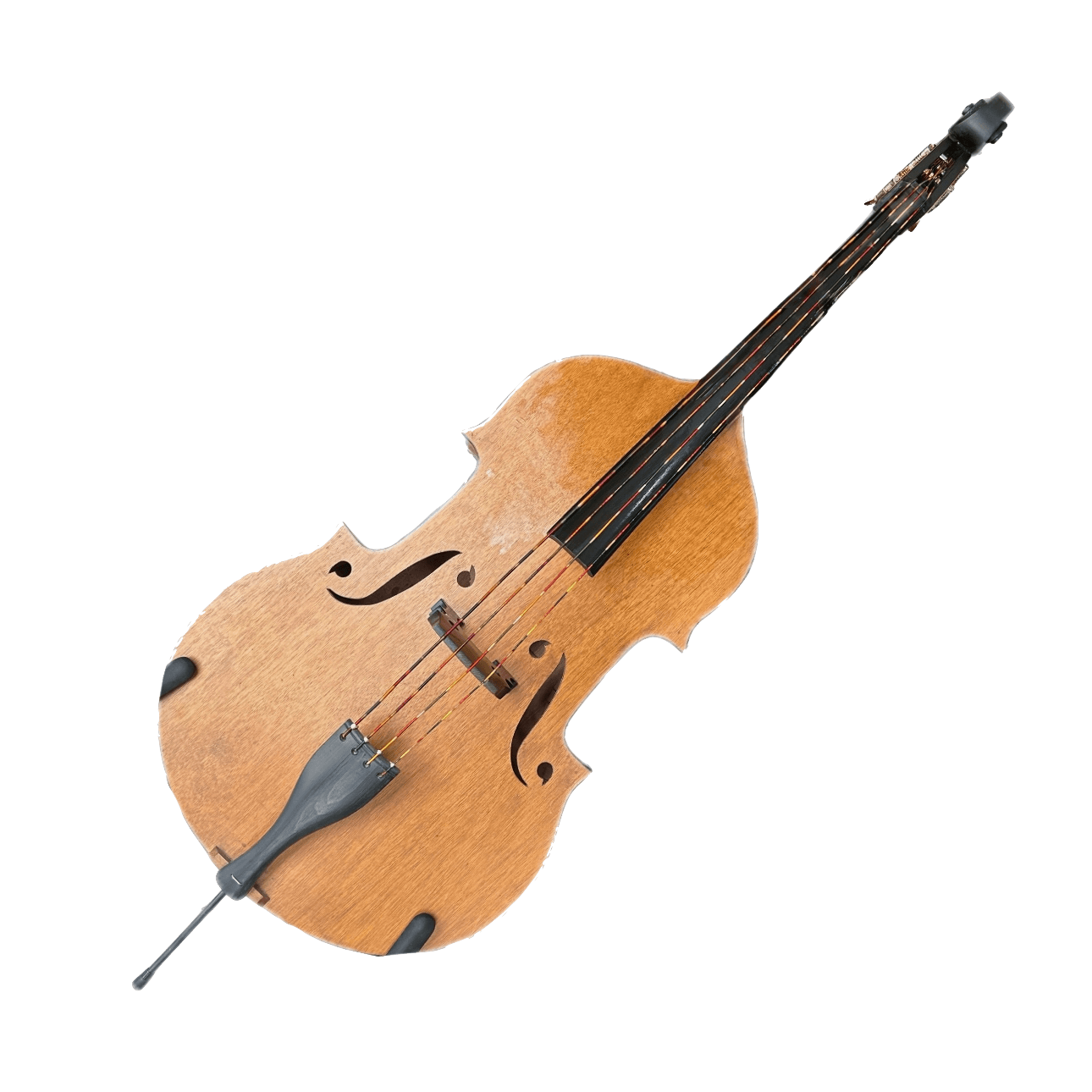
Body (Caja): Deep, bulbous, and made of pine or cedar. Its flat back and rustic build are designed to project sound loudly in outdoor settings.
Neck: Shorter than a standard bass for portability; fretless to allow smooth sliding between notes.
Strings: Usually 4 strings made of nylon or gut (tripa). This creates a signature "percussive thump" rather than the long sustain of steel strings.
Tailpiece: A heavy wooden anchor at the base that secures the high-tension strings.
Did You Know ...
That deep, walking thump under Peso Pluma's Ella Baila Sola is the tololoche at work — the same fretless wooden bass that almost vanished mid-century is now anchoring corridos tumbados worldwide. Listen below.
Its Roots
Evolution: It is a hybrid of the European double bass (contrabass) and the guitarra de golpe.
The Name: The word comes from the Mayan tolol, meaning "hollow" or "rounded," and the suffix -oche, which implies something large or wooden.
Modern Revival: While it almost faded away in the mid-20th century, it has seen a massive comeback in recent years thanks to the popularity of Regional Mexican genres like corridos tumbados.