The Anatomy of the Instrument
Headstock & Nut: Features 12 machine heads for high-tension tuning and a bone/plastic nut to guide the strings.
Neck & Fingerboard: Exceptionally short and wide to facilitate fast melodic play across 12 strings and 12–14 frets.
Body: A pear-shaped resonator with a flat back, cedar/spruce soundboard, circular sound hole (rosette), and a bridge for vibration transfer.
Strings: 12 steel strings arranged in 6 pairs (courses), played with a plectrum using a rapid tremolo.
Standard Tuning: G# – C# – F# – B – E – A (low to high).
Did You Know ...
Long before reggaeton ruled the charts, the pandereta was already the backbone of Puerto Rican Plena — and Bad Bunny's tracks still carry that same festive, percussive jingle pulsing underneath. Listen below.
Its Roots
Spanish Roots: In regions like Galicia, it is a technical powerhouse played by pandereteiras who use complex thumb rolls to accompany polyphonic singing.
The Filipino Connection: A festive icon of Philippine Christmas (Pasko), often handmade by carolers using wire and flattened bottle caps (tansans).
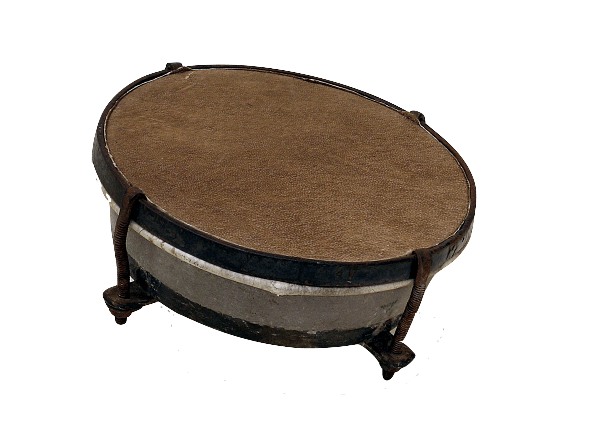
The Caribbean Pulse: Central to Puerto Rican Plena music, where different sizes (seguidor, punteador, and requinto) act as a "talking" drum to tell stories.
Design Essence: A perfect example of "minimalist but bold" — a simple geometric circle capable of producing high-energy, textured sound.