The Anatomy of the Instrument
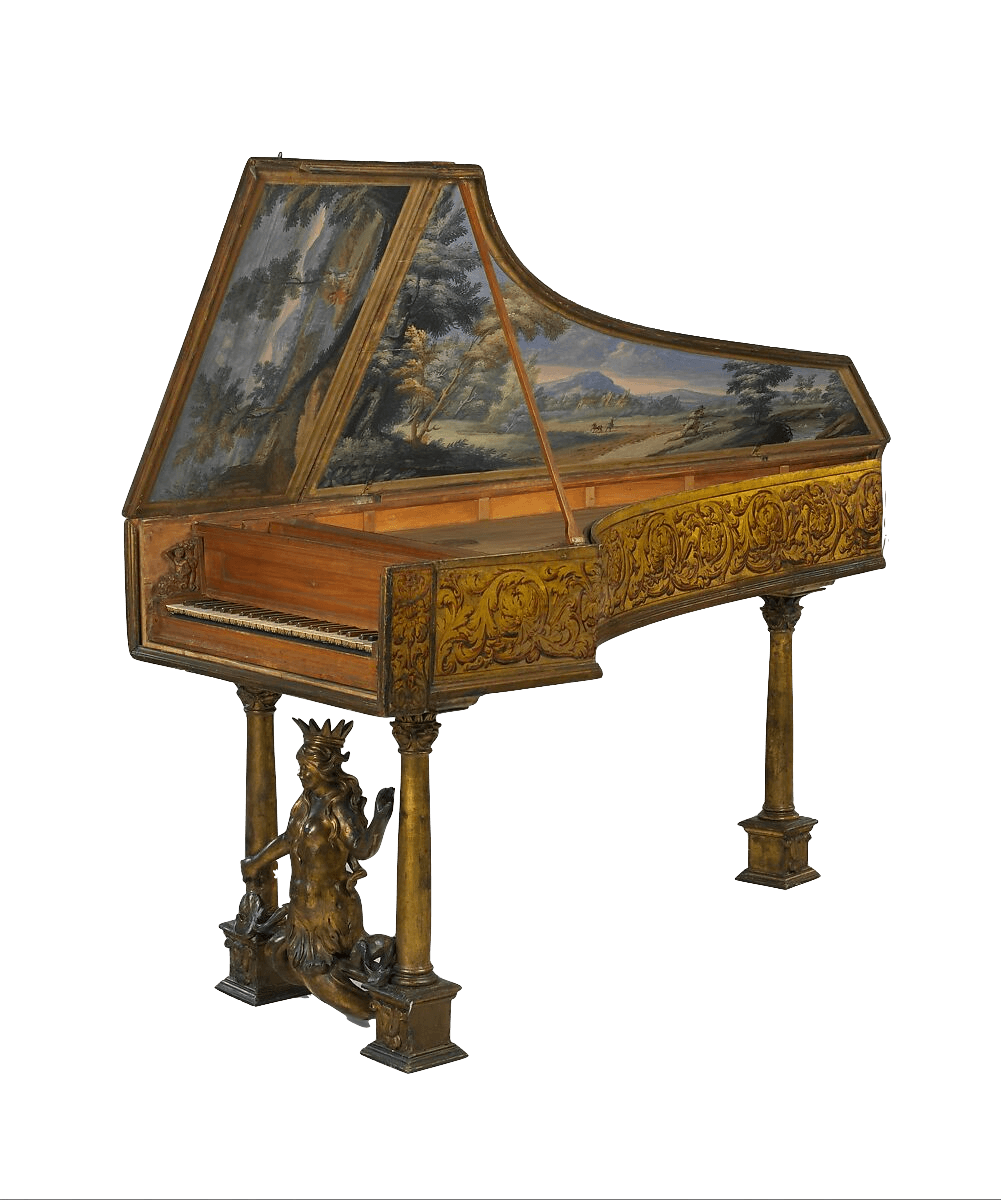
The Case: Usually wing-shaped, much like a grand piano but narrower and longer.
The Keyboards (Manuals): Many harpsichords have two rows of keys. This allows the player to switch between different volumes or "stops" instantly.
The Quills (Plectra): Inside, small pieces of bird quill (or modern plastic) pluck the strings when a key is pressed.
The Jacks: These are the vertical wooden strips that hold the plectra. When you release a key, the jack drops, and a small felt damper stops the string from vibrating.
The Strings: Thin, low-tension brass or iron strings. Since they are plucked, they produce a very bright, sharp attack.
Did You Know ...
Stromae laces a harpsichord-style plucked keyboard line through Fils de joie — that crisp Baroque "pluck" you hear under the beat is the same mechanism that powered Bach's courts, 400 years later. Listen below.
Its Roots
The Mechanism: It evolved from the psaltery, a handheld plucked instrument. By the 14th century, a keyboard mechanism was added.
The Golden Age: It peaked during the time of Bach and Handel. Every major orchestra and home of the elite had one.
The Decline: It was eventually replaced by the fortepiano because the harpsichord cannot play "loud" or "soft" based on how hard you hit the keys.
20th Century Revival: Early music enthusiasts brought it back into fashion for historical performances.