The Anatomy of the Instrument
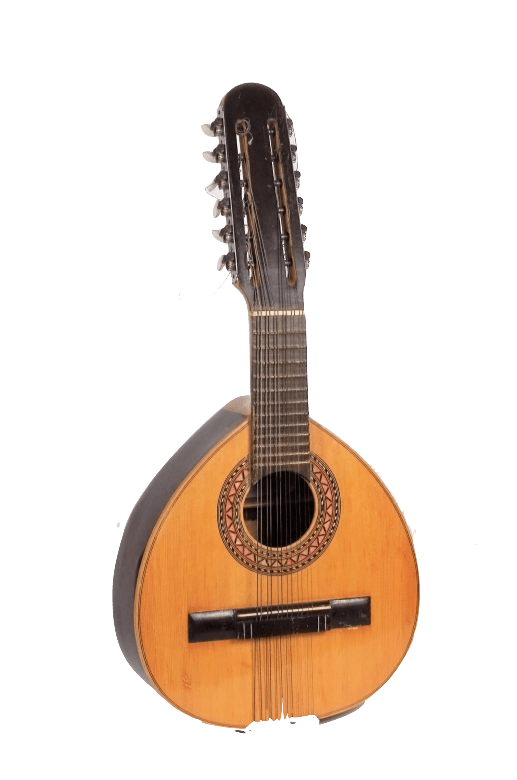
Headstock & Nut: Features 12 machine heads for high-tension tuning and a bone/plastic nut to guide the strings.
Neck & Fingerboard: Exceptionally short and wide to facilitate fast melodic play across 12 strings and 12–14 frets.
Body: A pear-shaped resonator with a flat back, cedar/spruce soundboard, circular sound hole (rosette), and a bridge for vibration transfer.
Strings: 12 steel strings arranged in 6 pairs (courses), played with a plectrum using a rapid tremolo.
Standard Tuning: G# – C# – F# – B – E – A (low to high).
Did You Know ...
The bandurria's bright rondalla tremolo lives on in HALINA's Kwarto Waltz — the same plucked-string warmth that fills Pasko carols quietly anchors this modern Filipino waltz. Listen below.
Its Roots
Ancient Roots: Traces back to the Greco-Roman Pandura, a three-stringed lute.
Moorish Influence: Middle Age Spanish instruments merged with short-necked lutes introduced during the Moorish invasion.
Spanish Evolution: Emerging as a 3-string instrument in the 16th century, it evolved through the 1800s into the modern 12-string (6-course) configuration.
Filipino Adaptation: Introduced during the colonial era, it became the lead voice of the Rondalla, evolving from folk roots to perform complex, operatic melodies.